
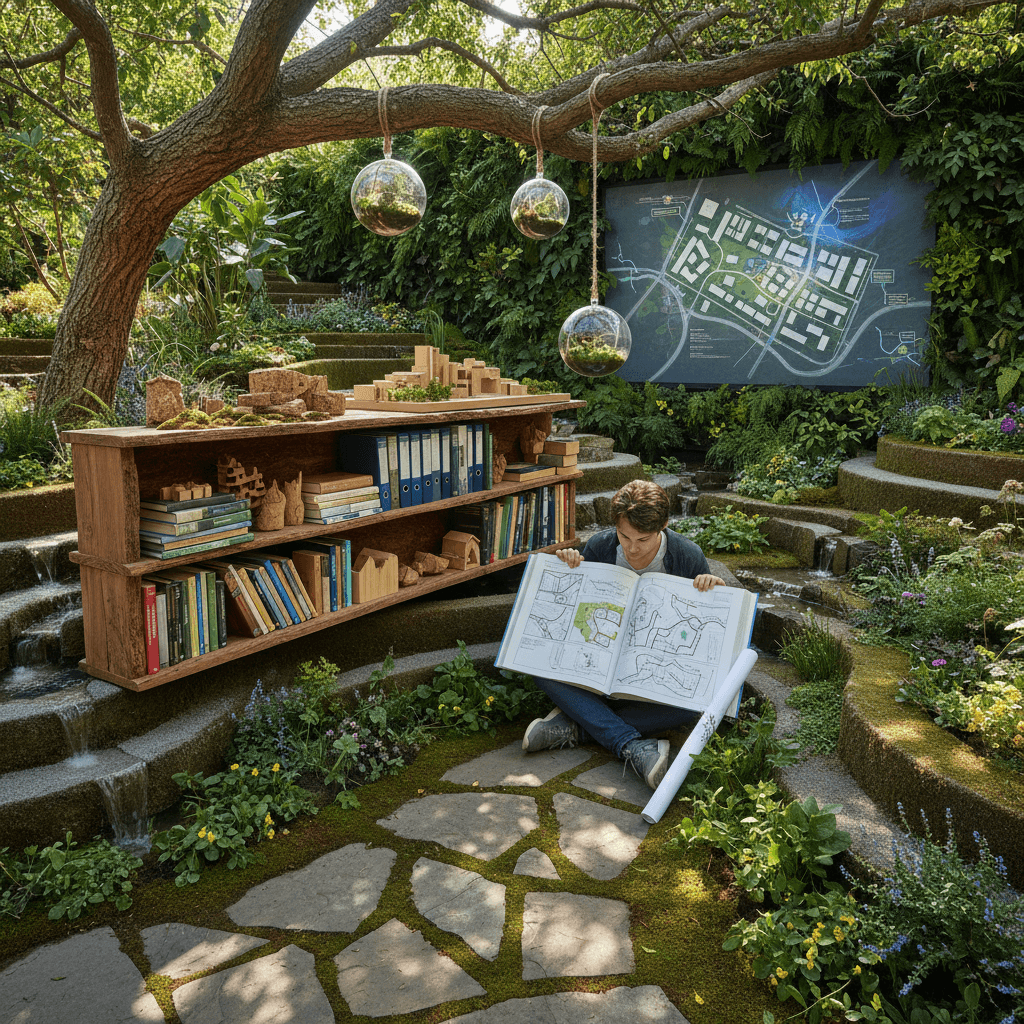

If designing outdoor public spaces, parks, gardens, and plazas sparks curiosity, having the right resources will make mastering the craft much easier. These tools cover everything from books and online courses to software tricks, plant identification aids, hands-on field tips, and advice on building a killer portfolio. People stepping into outdoor design and site planning will find this mix perfect for turning ideas into real, living spaces. Dive in to discover secrets that bring outdoor creations to life and set a strong foundation for a standout career.
Below you will find practical suggestions with examples and small exercises you can try right away. Read through the sections that match your immediate goals and bookmark the rest for ongoing reference.
Essential books and printed references for outdoor design learners
A few well chosen books can build a strong knowledge base. Seek titles that cover principles of form, planting, site analysis and construction documentation. For fundamentals consider books on visual composition, grading and stormwater basics, and planting design theory. A short list might include works on ecological design, plant communities and construction methods for small public spaces.
- Look for volumes that show step by step drawings of typical details such as retaining walls, paving transitions and planting bed construction.
- Choose illustrated planting guides that are region specific so you get reliable species lists for local climates and soils.
- Keep one field guide for trees and shrubs and another for groundcover and perennials so field work is quicker.
Online courses and certifications that build practical skill
Many platforms offer project based classes that teach renderings, hand sketching and technical drawing. Prioritize courses with peer review or instructor feedback so you get critique on real assignments. Short certificate programs can be useful to learn software and to add structured projects to a portfolio.
- Take a course that ends with a tangible deliverable such as a planting plan or a site concept board.
- Mix free tutorials with paid classes so you can try methods before committing money.
Software and digital tools every beginner should learn
Familiarity with a handful of tools will make you productive in studios and offices. You do not need to master every program, but you should be able to produce plan drawings, 3D massing models, and clear presentation boards.
Sketching and 3D modeling tools
- Start with a simple walk-through of a free 3D modeler and practice creating basic topography and massing.
- Sketch up quick concepts and combine views with annotated plans to explain design intent.
CAD and GIS for site documentation
- Learn basic CAD drafting to produce construction level plans and sections.
- Introductory GIS skills help with contour analysis, watershed mapping and plant suitability overlays.
Field experience internships and volunteer projects that build competence
Nothing replaces time on site. Internships and volunteer projects let you see how concepts are implemented and how construction challenges are solved. When you work on real projects you learn scheduling, material selection and contractor communication.
- Offer to help a local public garden or community group with planting days to gain hands on planting experience.
- Volunteer for small urban projects where you can assist with measuring, base mapping and simple detail work.
- Request to shadow a site foreman for a day to learn phasing and coordination practices.
Plant identification and ecological resources for practical planting knowledge
Good planting decisions come from knowing plant behavior, root systems and seasonal interest. Use regional plant lists, state extension services and mobile ID apps to build an accurate plant palette. Regular field observation helps you learn how species perform in sun and shade situations.
- Use an app to record observations and build a personal species database for future projects.
- Attend local nursery talks and plant sales to see mature specimens and ask growers about maintenance needs.
Creating a compelling portfolio and resume that wins interviews
Your portfolio should show process as much as finished work. Include studies, sketch iterations, hand sections and final presentation boards. Employers want to see how you think and how you solve common on the job problems.
- Lead with three to five strong projects and add smaller sketches or freelance work to show breadth.
- Document site visits with before and after photos when projects include planting or maintenance elements.
- Write short captions that explain your role on each project and the technical challenges you addressed.
For candidates focusing on maintenance or operations it helps to have contacts with local service providers. If you work in a region where lawn and garden care is a frequent part of project delivery you can learn a lot from local contractors. For example, a reliable resource for property maintenance and weekly mowing is lawn care services in Cumming which gives an idea of how maintenance plans are scoped and priced in that area.
Journals, blogs and forums for ongoing learning
Subscribe to a few reputable journals and follow profession specific blogs. Read case studies that explain construction sequences and maintenance experiences. Online forums and social groups provide practical tips on plant performance and construction details.
- Follow threads that include photos and measured drawings so you can compare recommended methods against real outcomes.
- Bookmark a handful of reliable sources and rotate reading through them weekly so you build knowledge steadily.
Networking and professional organizations that help with mentorship
Connecting with experienced practitioners accelerates learning. Attend local meetings, public lectures and informal site tours. Ask professionals about how they manage risk, handle client briefs and choose contractors. A short coffee meeting with a firm can lead to a shadow day or an internship.
- Prepare a concise portfolio and two questions focused on a recent project the person worked on to keep the meeting useful for both sides.
- Offer to help with small research tasks or graphics in exchange for feedback on your work.
Practical exercises to build skill quickly
Set small weekly tasks that cover different parts of the skill set. For example pick a public square and create a three sheet set with site analysis, concept plan and planting palette. Another week focus on a residential front yard with drainage concerns and produce grading sketches and planting notes.
- Practice drawing sections at human scale to understand plant heights and seating relationships.
- Make a maintenance schedule for one of your projects and list monthly tasks, tools and likely contractor time estimates.
Common pitfalls to avoid when starting out
New learners often present overly polished visuals without enough technical detail, or they show only final images without process. Balance is important. Also avoid relying on one software or presentation style. Learn to mix hand work with digital files to demonstrate flexibility.
- Do not submit renderings alone when an employer asks for construction drawings.
- Keep plant lists realistic and regionally appropriate instead of using exotic species that are hard to source.
As you develop technical fluency and site knowledge keep a small notebook with lessons learned from each field visit. Note which species tolerate compacted soil, which paving details create drainage problems, and which planting combinations require frequent attention. These simple observations will become essential reference material when you begin professional work.
Conclusion
Starting a career in outdoor site design requires a mix of formal learning, software practice, field time and a portfolio that shows process and problem solving. Use books and online learning to build a theoretical base, practice drawings and models to build technical skill and spend as much time as possible on real sites. Plant identification tools and local extension resources help you choose species that perform well in a given climate. Internships and volunteer work provide on the job experience and contacts that can lead to paid positions. Finally, maintain a concise portfolio and prepare short descriptions of your role on each project so interviewers see the value you bring. If you are ready to take a next step look for a short project to document from start to finish and reach out to local professionals for feedback. Taking one small action now will create momentum for the next step in your training and career.


